

What Are the Current Hiring Trends for Utah Manufacturers?

 Key Takeaways
Manufacturing companies in Utah span aerospace, medical devices, food, and outdoor gear, and the state leads the country in projected manufacturing job growth.
- Aerospace and defense anchor the state’s largest manufacturing sector
- Advanced manufacturing holds half of jobs, averaging $86,980 yearly
- Engineering and technical roles grow faster than traditional production
- Apprenticeships fill entry-level seats; senior searches need direct outreach
Utah is projected to lead the country in manufacturing job growth this decade, and most of the companies doing the hiring aren’t the ones people picture. They’re a rocket motor plant in Promontory, a carbon fiber facility in West Valley City, a cheese plant in Logan that makes nearly a fifth of the Swiss cheese in the United States.
Manufacturing added $30 billion in value and accounted for 10% of Utah’s GDP in 2023. Half the state’s manufacturing jobs now sit in advanced manufacturing, where average pay runs $86,980 a year, and the roles growing fastest are engineering and technical rather than traditional production.
That creates a specific hiring problem. The talent pipeline is expanding through apprenticeships and technical colleges, but it fills entry-level roles on a timeline of years. Senior technical and leadership openings compete against every other manufacturer in the state.
This guide covers Utah’s manufacturing sectors and the companies that anchor each one, along with the hiring trends shaping who you’re competing with and what it takes to land them.
Top Manufacturing Companies in Utah by Sector
Utah manufacturing added $30 billion in value and accounted for 10% of the state’s GDP in 2023. Industry data counts 2,897 manufacturing companies employing 173,757 workers, concentrated along the Wasatch Front: Salt Lake City has 48,330 industrial jobs, Ogden 15,235, Provo 9,641, Logan 7,249, and Lehi 6,237.
The sectors below aren’t equal in size or trajectory, and the differences matter for anyone hiring.
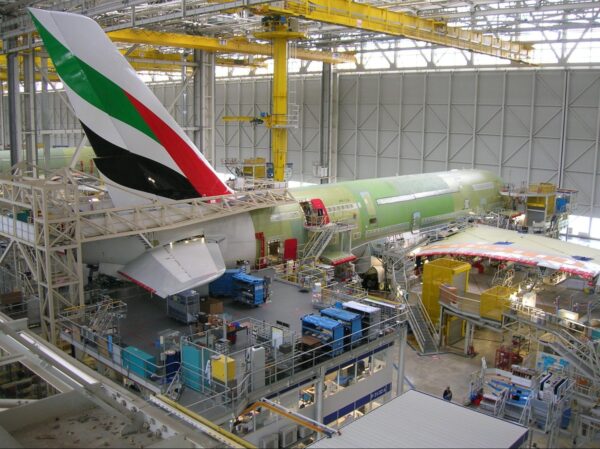
Aerospace and defense
The largest manufacturing sector in the state, and the fastest-growing aerospace and defense industry in the country. An EDCUtah analysis for industry association 47G found the sector represented 19.2% of Utah’s GDP in 2023, employing over 236,000 people directly.
Counting indirect and induced effects, it accounts for close to half a million jobs, nearly $100 billion in total economic output, and $1.6 billion in direct annual tax revenue. The Kem C. Gardner Policy Institute puts the defense portion alone at 173,000 jobs and $22.2 billion, or 7.8% of Utah’s GDP, equivalent to the state’s entire construction industry.
| Company | Location | What they make | Scale |
| Northrop Grumman | Promontory, Magna, Roy | Solid rocket motors, strategic deterrence systems | 11,000+ Utah employees |
| Autoliv | Ogden, Brigham City, Promontory, Tremonton | Airbag inflators, automotive safety systems | ~3,850 Utah employees |
| L3Harris | Salt Lake City | Networked communications | 2,800 Utah employees; $128,000 average salary |
| Hexcel | West Valley City | Advanced carbon fiber composites | World’s largest high-performance carbon fiber plant |
| Petersen Inc. | Ogden | Precision fabrication for defense, nuclear, energy | 500+ employees |
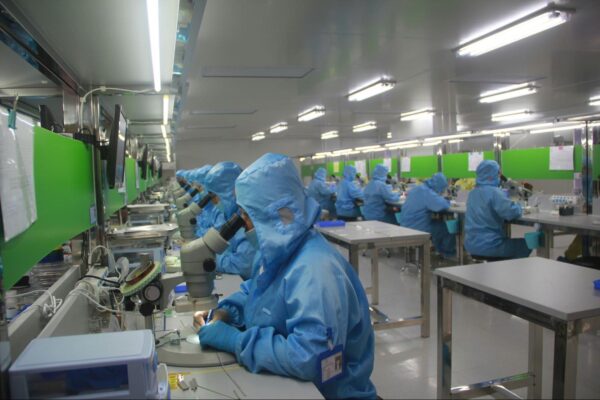
Life sciences and medical devices
Utah has the third-highest concentration of life sciences jobs in the country, behind only Massachusetts and New Jersey. The Gardner Institute counts approximately 1,600 facilities and more than 182,000 jobs supported directly and indirectly, contributing over $22 billion annually. From 2012 to 2022, employment grew 5.1% a year, against 3.4% for other Utah industries. Average earnings run about $96,000, nearly 50% above the $65,000 state average.
| Company | Location | What they make | Scale |
| Merit Medical Systems | South Jordan | Single-use medical devices | $1.51 billion 2025 revenue |
| Varex Imaging | Salt Lake City | X-ray tubes and imaging components | Teledyne acquisition pending, $1.1 billion |
| Ultradent Products | South Jordan | Dental materials and equipment | Acquired by Mitsui Chemicals, $900 million |
| BioFire Diagnostics | Salt Lake City | Molecular diagnostic panels | 1,000+ employees |
| Edwards Lifesciences | Draper | Heart valves, critical care devices | 300,000 sq ft facility |
| Utah Medical Products | Midvale | Women’s and infants’ healthcare devices | Nasdaq: UTMD |
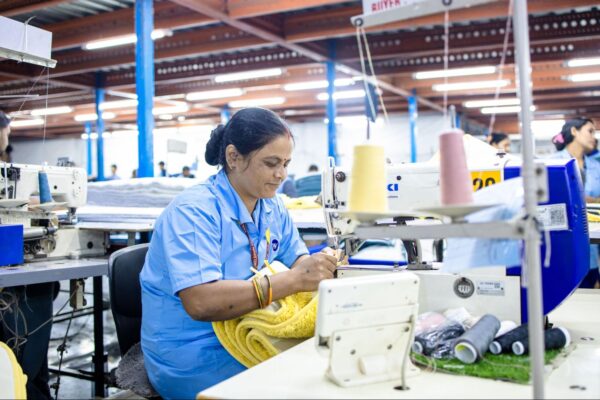
Consumer and outdoor products
Utah’s outdoor recreation economy generated $9.75 billion in value added in 2024, 3.3% of state GDP, supporting 75,182 jobs and $4.6 billion in wages. Since the BEA began tracking the sector in 2012, Utah has averaged 8.4% annual growth, the highest rate of any state. Utah was also the first state to create an Office of Outdoor Recreation, in 2013.
| Company | Location | What they make | Scale |
| Lifetime Products | Clearfield | Tables, sheds, kayaks, basketball systems | 2.2 million sq ft plant |
| iFIT | Logan | Fitness equipment, formerly ICON Health & Fitness | NordicTrack, ProForm brands |
| Black Diamond Equipment | Salt Lake City | Climbing, skiing, mountain gear | Nasdaq: CLAR |
| Liberty Safe | Payson | Home and gun safes | Largest US safe plant, 700 a day |
| Blendtec | Orem | Commercial and residential blenders | Sold in 68 countries |
Supplements and nutritional products
Greater Salt Lake City is one of the country’s hubs for nutraceutical manufacturing, a cluster acquirers cite by name when they buy into it. The companies here range from billion-dollar direct sellers that make most of their products in-house to contract manufacturers producing for brands nationwide. Several sell through independent distributor networks rather than retail, which shapes how they hire.
| Company | Location | What they make | Scale |
| USANA Health Sciences | Salt Lake City, West Valley City | Supplements, foods, skincare | 3x UMA Manufacturer of the Year |
| doTERRA | Pleasant Grove | Essential oils and wellness products | 610,000 sq ft campus |
| Young Living | Lehi | Essential oils | North America’s largest distillery |
| Nature’s Sunshine | Lehi HQ, Spanish Fork plant | Supplements and herbal products | $480 million FY2025 revenue |
Industrial, metals, and building materials
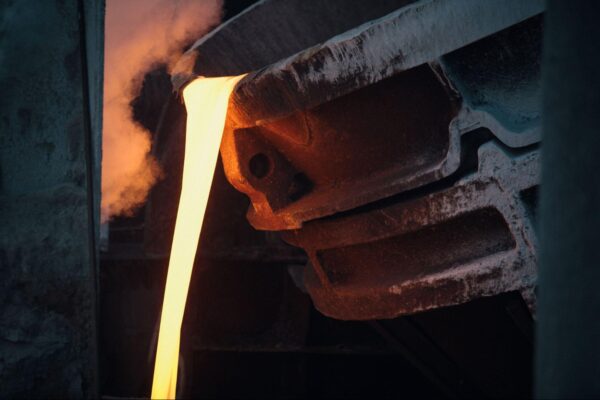
This is the sector that builds everything else. Utah’s population growth keeps demand steady for aggregates, concrete, and structural steel, and the state’s recycled-steel and precast operations have run here for decades. It’s also where the state’s Manufacturer of the Year award has landed most recently, a sign of how much operational maturity sits in these plants.
| Company | Location | What they make | Scale |
| Staker Parson | Ogden | Aggregates, asphalt, ready-mix concrete | ~2,500 employees, 70+ locations |
| Nucor | Brigham City, Plymouth | Steel joists, bar steel, metal buildings | ~1,300 Utah employees |
| NWPX Geneva | Orem, Salt Lake City, St. George | Reinforced concrete pipe and precast | 2025 UMA Manufacturer of the Year |
| SME Industries | West Jordan | Structural steel fabrication | — |
| Skytrac / Leitner-Poma | Tooele | Fixed-grip ski lifts | $27 million plant opened 2024 |
Food and beverage
Utah’s food manufacturers split between multinational plants and family-owned operations that have been here for generations. Cache Valley’s dairy industry and the state’s position at the crossroads of western freight routes both help, and this is the sector most likely to publish hourly wage rates in its job postings.

| Company | Location | What they make | Scale |
| Gossner Foods | Logan | Swiss cheese, UHT shelf-stable milk | 18% of US Swiss cheese |
| Nestlé USA | Springville | Stouffer’s frozen meals | One of three US frozen meals plants |
| Danone North America | West Jordan | Fresh yogurt | ~305 employees; $26.06/hr starting |
| BetterBody Foods | Lindon | Cooking oils, sweeteners, pantry staples | 100,000 sq ft facility |
Electronics and hardware
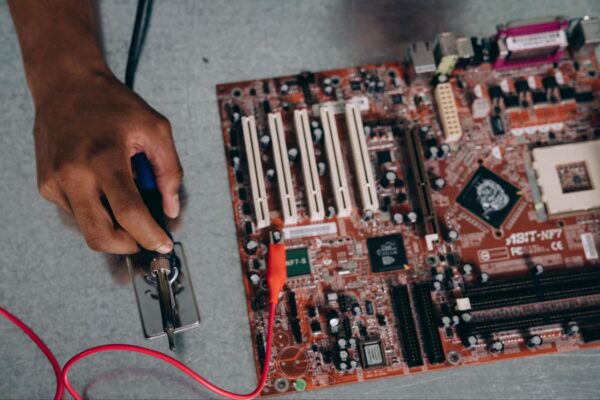
Smaller in headcount than the sectors above, but it holds some of the state’s most specialized manufacturing. These companies build physical products in Utah rather than outsourcing overseas, and two of them hold Manufacturer of the Year or Best of State recognition for hardware production.
| Company | Location | What they make | Scale |
| Monnit | South Salt Lake | Wireless IoT sensors | 2019 UMA Manufacturer of the Year |
| Cirque | Salt Lake City | Capacitive touchpads and touch solutions | Invented the touchpad; Alps Alpine subsidiary |
| PDK | Draper | Cloud access control hardware | 8 straight years on the Utah 100 |
Contract manufacturing and precision machining
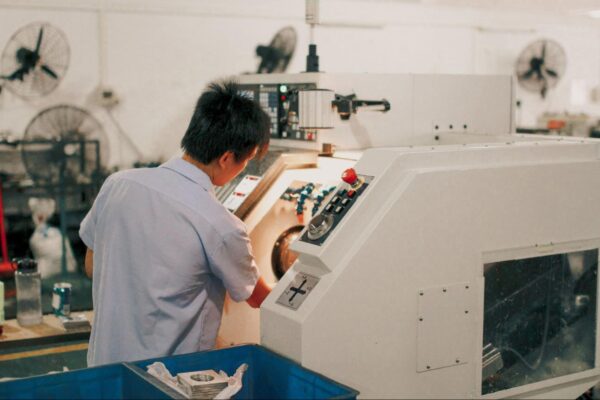
The tier most manufacturers depend on and few outside the industry can name. These shops machine, assemble, and package for the aerospace, medical device, and supplement companies listed above. They’re also where Utah’s apprenticeship and training programs are most active, since the skills involved are hard to hire off the open market.
| Company | Location | What they make | Scale |
| JD Machine | Ogden | Precision CNC machining and fabrication | ~200 employees; apprenticeships since 1999 |
| ATL Technology | Springville | Medical device contract manufacturing | Founded 1993 |
| Deseret Laboratories | St. George | Nutraceutical and OTC contract manufacturing | ~$31.8 million revenue |
Verified every link and replaced the secondary ones. Three figures didn’t survive; details after the section.
Hiring Trends in Utah Manufacturing
1. Utah leads the country in projected manufacturing job growth
State labor department projections put Utah first in the nation for relative manufacturing job growth, with employment expected to rise 16.6%, or about 25,180 jobs. The state’s largest manufacturing industries, aerospace, medical devices, and electronics, drive most of that demand. Utah’s long-term industry projections are published by the Department of Workforce Services and updated every two years.
Nationally, Deloitte and the Manufacturing Institute project the industry could need as many as 3.8 million workers by 2033, with more than 5 in 10, or 1.9 million, going unfilled if the skills and applicant gaps persist. Sixty-five percent of manufacturers named attracting and retaining talent as their primary business challenge.
Two Utah projects account for much of the near-term demand. Texas Instruments has two 300-millimeter wafer fabs in Lehi, with the second expected to reach production as early as 2026. Northrop Grumman broke ground in July 2026 on a sixth building at its Roy Innovation Center, adding hundreds of jobs for the Air Force Sentinel program.
2. Half of Utah’s manufacturing jobs are now advanced manufacturing
The Governor’s Office of Economic Opportunity treats advanced manufacturing as one of five targeted industries, and the Department of Workforce Services reports it employed 77,170 people in 2024, accounting for 50% of total manufacturing employment in the state. These are companies using AI, machine learning, and data science in production.
The wage gap between the two halves is the number to plan against. Advanced manufacturing pays an average of $86,980 a year, 29% more than the non-targeted portion of manufacturing. Across all five targeted industries, average wages run $83,713 against $58,059 for other industries.
3. The fastest-growing roles are technical, not traditional production
Utah’s occupational projections for 2022 to 2032 show where the demand concentrates. Industrial engineer roles are projected to grow 38%, from 3,160 to 4,350 positions, against 11% nationally. Production, planning, and expediting clerks are projected to grow 24% in Utah while declining 2% nationally, and industrial production managers 21% against 2% nationally.
Traditional trades tell a different story. Tool and die makers are projected to grow 10% in Utah while falling 11% nationally, with roughly 50 openings a year. Utah is growing in categories the rest of the country is shedding, which means the competition for those workers is local rather than national.
4. Automation is changing roles, not eliminating them
Deloitte’s analysis of manufacturing workforce trends finds the fastest-growing occupations in the sector are industrial maintenance technicians, engineers, logisticians, data scientists, and software developers.
Industrial machinery maintenance roles could grow 16% by 2032, and statistician and data scientist roles in manufacturing by close to 30%. The broader data on AI and job displacement shows the same split across industries: roles change shape faster than they disappear.
5. The pipeline is being built, but it takes time
Utah has more state-level workforce infrastructure than most. Talent Ready Utah coordinates apprenticeship and training pathways with employers, the Utah Manufacturing Modernization Grant helps small and mid-sized manufacturers adopt Industry 4.0 technology, and the state’s technical colleges have expanded certification programs for advanced manufacturing roles.
Those programs fill entry-level and technician roles over a period of years. They don’t solve an urgent opening for a controls engineer, a quality manager, or a plant leader, which is where most manufacturers find themselves competing directly with the companies listed above. They also only pay off if the people they train stay, which makes retaining high performers as much a part of the workforce strategy as hiring them.
Hiring in a Sector That’s Growing Faster Than Its Workforce
Utah’s manufacturers face a gap that gets wider the more senior the role. Production and entry-level positions draw candidates, and the state’s apprenticeship programs keep feeding that end of the pipeline. Controls engineers, quality managers, plant leaders, and operations executives are a different search entirely. Those people are employed, they’re not browsing job boards, and every manufacturer on this list wants them.
The practical question is which openings you can fill through postings and which need someone approaching candidates directly. Getting that call wrong usually means a critical role sitting open for a quarter while production targets slip.
Recruiting Connection has worked with Utah employers on that second kind of search for more than 30 years. Our operations recruiting team fills production, supply chain, and plant leadership roles, and our executive recruiters handle COO, VP of Operations, and general manager searches from role definition through offer.
Contact our team today to start the search for the people keeping your lines running.
FAQs: Manufacturers in Utah
1. What are the biggest manufacturing industries in Utah right now?
Aerospace, electronics, food production, medical devices, and advanced materials lead the way, supported by a strong network of global and local companies.
2. Which companies are major players in the Utah manufacturing industry?
Northrop Grumman, Hexcel, L3Harris, Merit Medical, Lehi Roller Mills, and Varex Imaging are just a few among more than 4,000 manufacturers statewide.
3. How is automation changing manufacturing in Utah?
More companies are adopting robotics, smart sensors, and automated quality control, which boosts efficiency and changes the mix of in-demand skills.
4. What sustainability efforts are Utah manufacturers making?
Many are investing in energy-efficient equipment, recycled materials, and waste reduction to meet market and regulatory demands, especially at Owens Corning and Alcoa.
5. Which manufacturing sectors are growing fastest?
Biotech, medical devices, clean energy, and precision instruments are all experiencing rapid expansion, creating new job opportunities and investment opportunities.
6. What jobs and skills are most in demand?
Automation technicians, engineers, quality control experts, supply chain analysts, and sustainability managers are in high demand. Adaptability and digital skills are also critical.
7. Where are manufacturing jobs most concentrated in Utah?
Salt Lake City and Utah County lead the way, but rural areas like Nephi and Perry are also experiencing steady job growth, thanks to new investments and facility expansions.
8. How can Utah manufacturers find the right talent?
Partnering with specialized operations or executive recruiters, such as Recruiting Connection, helps companies identify skilled leaders and technical experts who can drive growth.
SHARE



Struggling to find top
talent for your business?
Connect with the expertes at Recruiting Connection and discover the difference our full-service recruitment can make.
Contact Us Today